
Three-Season vs. Four-Season Sunroom: Which Is Right for Your South Jersey Home?
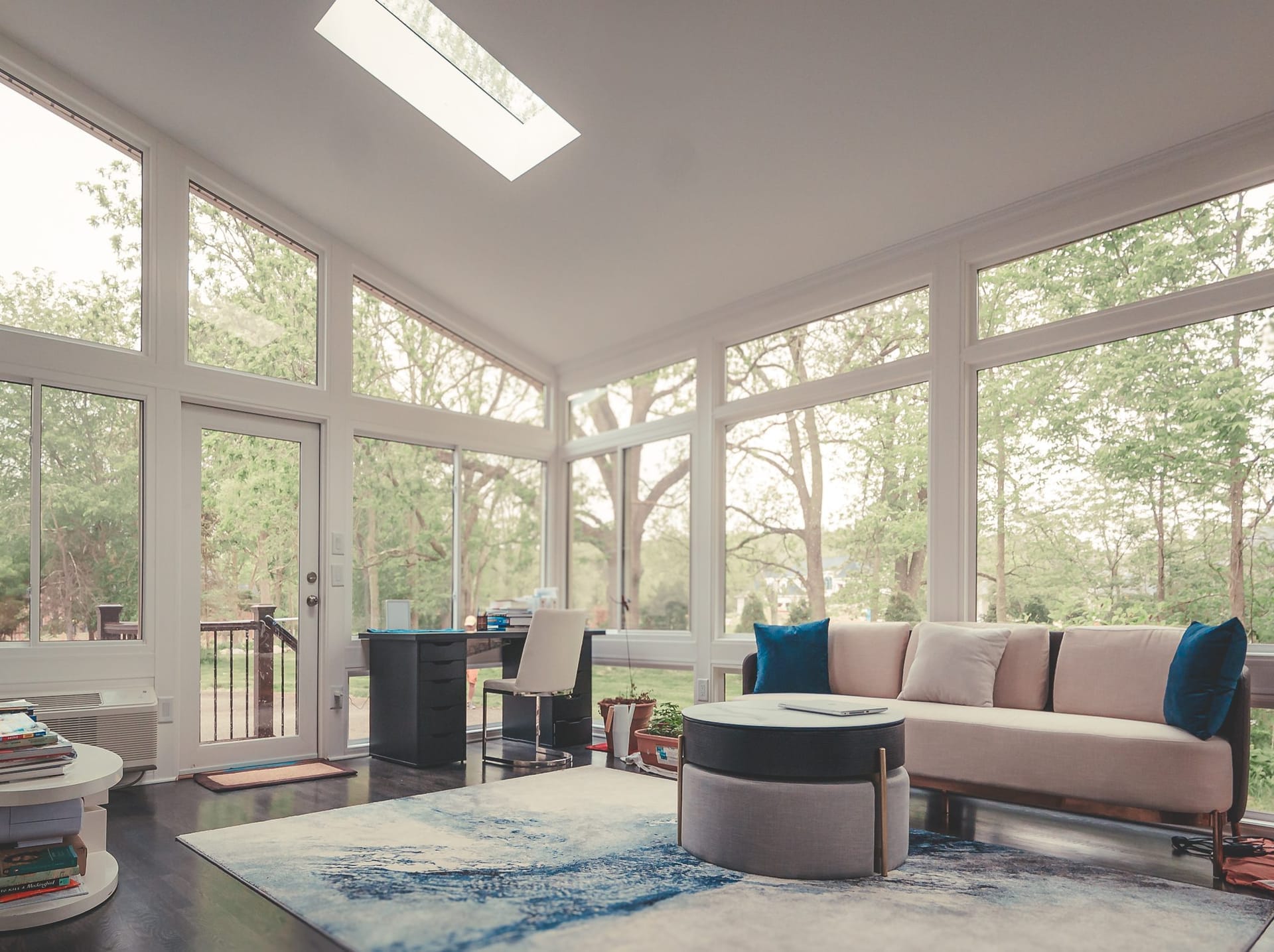
A three-season sunroom is a glass-enclosed room built for comfortable use in spring, summer, and fall, without its own heating and cooling. A four-season sunroom is a fully insulated, climate-controlled room with its own heating and cooling that you can use comfortably all year, including a New Jersey January. When you are weighing a three season vs four season sunroom, the main difference comes down to insulation, glass, and an independent HVAC source. Which one is right for you depends on how you will actually use the room and what you want to spend, not on which type sounds more impressive.
A lot of homeowners tell us they have asked this exact question and gotten a sales pitch instead of a straight answer. They went to a home show, a national company gave them a price, and suddenly every option pointed toward the most expensive build. That is not what this guide is. By the end you will know exactly what each room is, what drives the cost difference, and which one fits how you actually live, whether or not you ever call us. If you want a room you can actually use all year, or just a bright, comfortable space for most of it, this is the honest explanation you were looking for.
Here is what we cover: plain-language definitions of both types, a side-by-side comparison table across eight real decision factors, a five-question checklist so you can map the choice to your own situation, where LivingSpace sunrooms fit on the spectrum, and the permit reality in New Jersey (which most homeowners do not know and most articles skip).
What Is a Three-Season Sunroom?
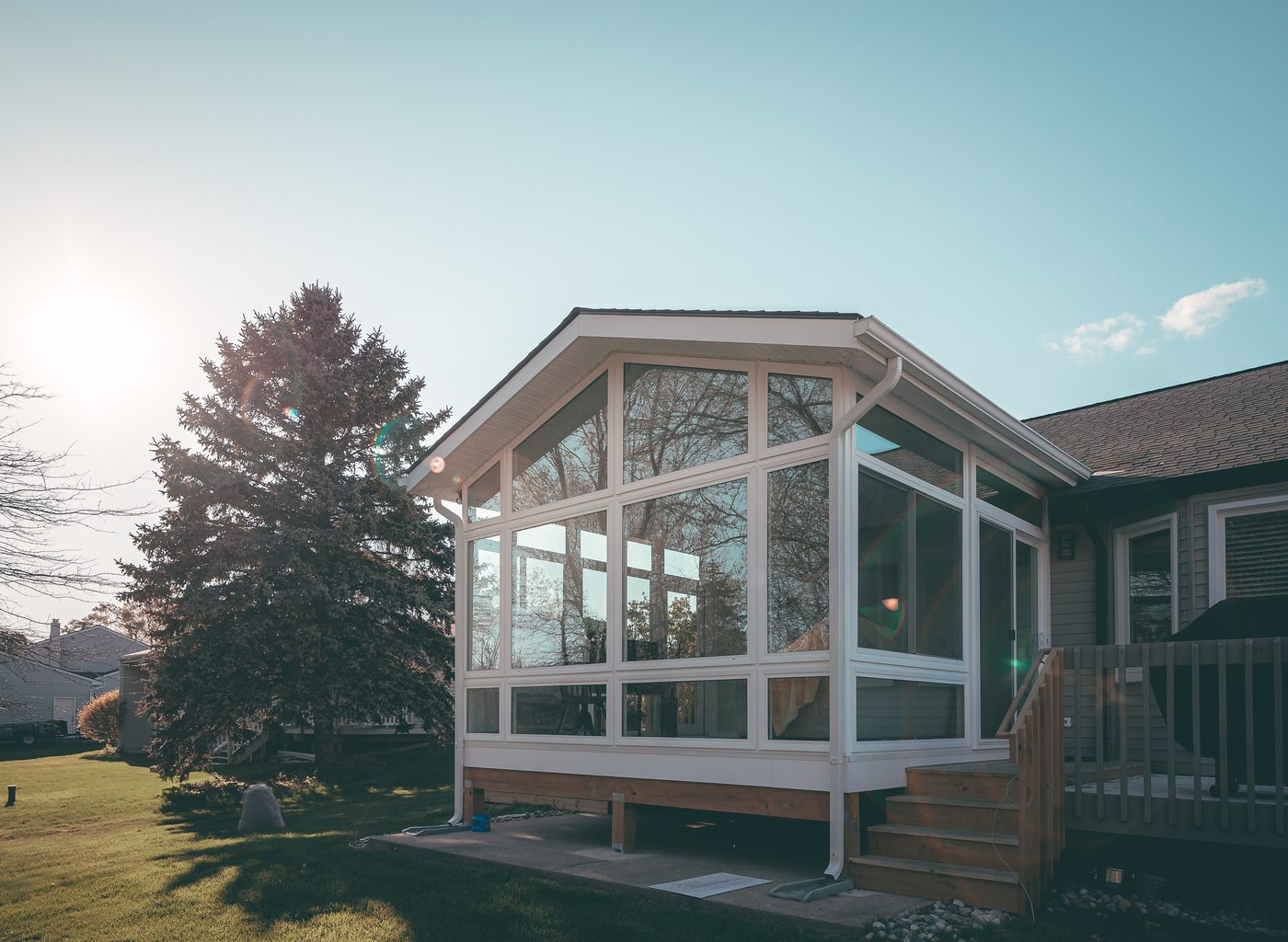
A three-season sunroom is a glass-enclosed room designed for comfortable use from roughly April through October in South Jersey. It has large glass panels on most or all of its walls, a glazed or solid roof, and it sits on an existing deck, slab, or new foundation. What it does not have is insulation in the walls and roof or its own independent heating and cooling system. You can add a space heater or a window unit, but the room itself is not built to hold temperature through a January night.
Construction typically uses aluminum or vinyl framing with single-pane glass or lighter-weight glazing, which keeps the cost lower than a fully insulated build. Many three-season rooms are built right over an existing deck or on a poured concrete slab, which is part of why they are generally the lower-cost entry point into adding glass-enclosed living space. If you have been considering converting a screened porch or open-air deck, a three-season enclosure is often the most natural starting point.
The honest tradeoff is this: a three-season room will be cold in deep winter and warm in peak summer without supplemental heating or cooling. On a bright March morning or a mild October afternoon, it is wonderful. On a 20-degree January night, you will want to be on the other side of the door. That is not a flaw in the product. It is the design. For the right homeowner, a three-season room is a genuinely great choice, not a lesser version of something better. It gives you bug-free outdoor living for most of the year, and it does it for meaningfully less than a full four-season build.
If you want to explore what a three-season room looks like as part of a larger project, see our sunroom builds for a broader picture of what we install across South Jersey.
What Is a Four-Season Sunroom?
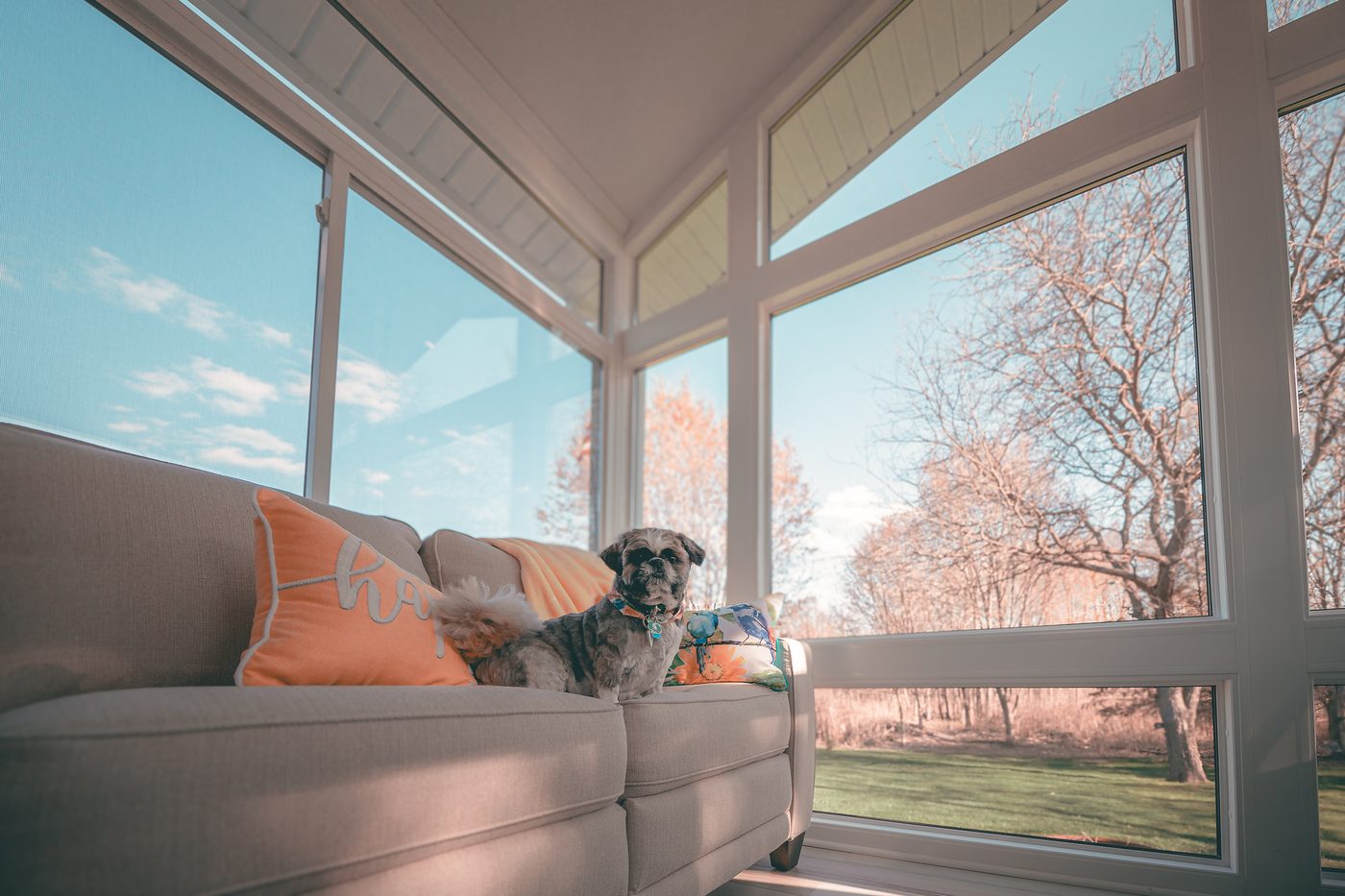
A four-season sunroom is a fully insulated, climate-controlled room that you can use comfortably all year, including in a New Jersey winter. The walls and roof are insulated, the glass is typically double-pane with a low-emissivity (low-E) coating and often argon gas fill between the panes, and the room has its own independent heating and cooling source, usually a mini-split system or an extension of the home's existing HVAC. Those three things, insulation, upgraded glass, and dedicated HVAC, are what separate it from a three-season room and what drive the higher cost.
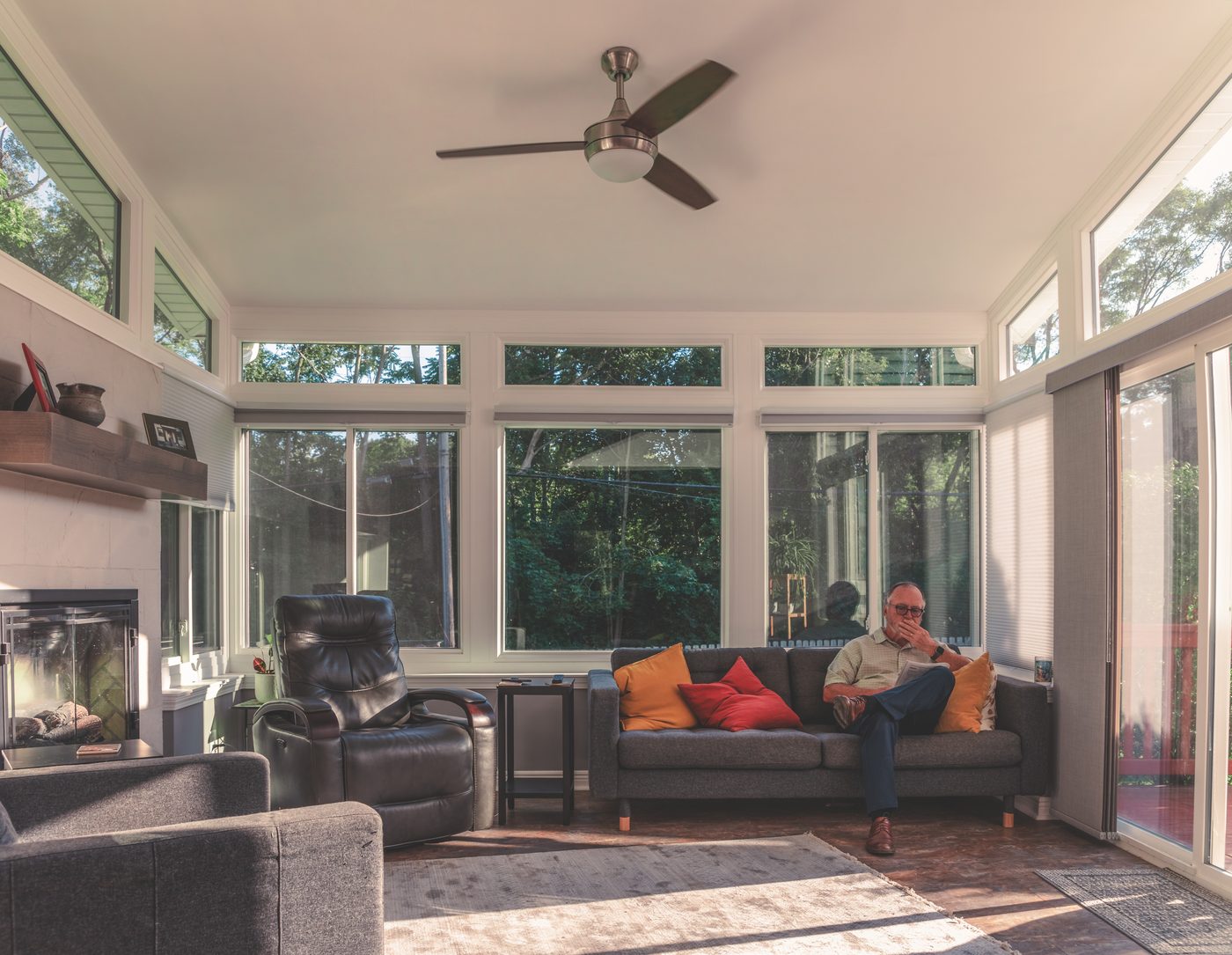
Because a four-season sunroom is built to hold temperature, it functions like a real room of the house. You can put a coffee maker out there and actually use it in January. The homeowners we work with across Cumberland County and the rest of South Jersey who choose a four-season build often describe it as the room the whole family ends up in, not just a seasonal bonus space. It is where you sit with your morning coffee, where the grandchildren hang out, and where you read in December with the sun coming through the glass.
On resale and appraisal, a four-season room generally counts as livable square footage in a way a three-season room does not, because it is insulated, climate-controlled, and permitted as conditioned living space. That does not mean it adds a fixed dollar amount to your home value, and we would never invent a number to make the investment look better than it is. What it does mean is that a four-season build tends to hold up better under appraisal, and it gives a future buyer a room they can actually use all year. For homeowners who are investing in staying in their home through retirement, that is a meaningful difference.
If you are thinking about a four-season LivingSpace sunroom for your South Jersey home, the next step is a free consultation where we can look at your specific space, your goals, and what makes sense.
Three-Season vs. Four-Season Sunroom: A Side-by-Side Comparison
The eight factors below cover the real decision points. Read across the row for each attribute to see how the two types differ.
| Feature | Three-Season Sunroom | Four-Season Sunroom |
|---|---|---|
| Year-round use | Spring through fall (roughly April to October in South Jersey) | All year, including winter |
| Insulation | Minimal or none in walls and roof | Fully insulated walls and roof |
| Heating and cooling | None, or supplemental only (space heater, window unit) | Dedicated HVAC source (mini-split or home system extension) |
| Glass type | Single-pane or lighter glazing | Double-pane, low-E, typically argon-filled |
| Typical cost | More affordable entry point into glass-enclosed living space | Meaningfully higher investment, driven by insulation, upgraded glass, and HVAC |
| Permit required in NJ | Yes, built to NJ UCC code | Yes, built to NJ UCC code |
| Counts as living space | Generally not counted as conditioned living area for appraisal | Typically yes, when properly insulated, climate-controlled, and permitted |
| Best for | Bright, bug-free seasonal use; homeowners working to a tighter budget | True year-round room; homeowners who want maximum livability and resale value |
The four-season room buys you winter, year-round livability, and a stronger resale position. The three-season room buys you most of the year for meaningfully less. Neither is the wrong answer. The right one depends on how you will actually use the space.
Now, How to Match the Choice to Your Situation
The comparison table tells you what each room is. The harder question is which one is right for your home, your budget, and how you actually plan to use the space. That answer is different for everyone, and it is worth taking a few minutes to think through it honestly before you book a consultation.
The five questions below are the ones we walk through with homeowners before any project starts. There are no wrong answers, and there is no universally "right" choice. The right choice is the one that matches how you will live in the room.
Trying to decide which sunroom fits your home? We are happy to talk it through, no pressure.
How to Decide: 5 Questions to Ask Yourself
There is no universally right answer here. The right answer is the one that matches how you will actually live in the room. Work through these five questions honestly.
Will you actually use the room in winter?
If you picture yourself out there in January with a cup of coffee, that is a four-season room. If the room is really a spring-through-fall space for you, a three-season sunroom is plenty and is a genuinely smart choice.
Do you want it to feel like a real room of the house, or a comfortable bonus space?
If you want it to function like an everyday room you use year-round, with consistent temperature and the ability to leave plants or furniture out there all winter, that points to a four-season build.
What is your budget, honestly?
A four-season room costs meaningfully more because of the insulation, upgraded glass, and dedicated HVAC. If you want to get into glass-enclosed living space on a tighter budget and are comfortable using the room from spring through fall, a three-season sunroom is a real and worthwhile option.
Does living-space value matter for resale?
If you plan to sell in the next five to ten years and want the room to count as conditioned living area for appraisal purposes, a four-season room is the stronger position. A three-season room adds appeal and usability, but it typically does not count as livable square footage.
How is the space exposed, and how consistent does the temperature need to be?
If the room faces winter wind and gets a lot of cold northern exposure, or if you need consistent comfort for pets, plants, or people with health sensitivities, a four-season room's insulation and HVAC pay off directly. A well-protected south-facing spot might feel fine in a three-season room well into late fall.
Most people, when they work through these five questions honestly, find that one answer becomes clear. If you are still on the fence, that is a good sign a conversation would help. Our consultations are free, and we will tell you what we actually think fits your home, not what costs more.
Where LivingSpace Sunrooms Fit
As a LivingSpace Premier Partner, South Jersey Sunrooms & Decks installs LivingSpace sunroom systems. LivingSpace products are engineered for true four-season performance: insulated aluminum frames, high-performance double-pane low-E glass, and full compatibility with HVAC. When homeowners ask us which system we recommend for genuine year-round use, LivingSpace is the answer we give, because that is what it is built to do. That said, a three-season configuration is the right call for a meaningful share of the homeowners we talk to, and we will say so plainly if that is what fits your situation.
If you want to research the product on your own before talking to anyone, the manufacturer's site is a good place to start: LivingSpace.com. Linda's instinct to do that research herself is a good one. When you are ready to talk through what a build would look like for your home, see our LivingSpace sunroom service for a closer look at the process.
Do You Need a Permit for a Sunroom in New Jersey?
Yes, both three-season and four-season sunrooms require a permit in New Jersey. The work is built to the NJ Uniform Construction Code (UCC), which means plans, inspections, and sign-off from the local building department. Most homeowners do not know this going in, and most articles on this topic skip it entirely. We include it here because knowing it protects you.
Why does it matter? An unpermitted sunroom can create serious problems at resale. Title companies and buyers' attorneys will ask whether the addition was permitted, and an unpermitted structure can complicate or kill a sale, void homeowner's insurance coverage on that space, and leave you exposed to code violations. A contractor who offers to skip the permit to save time or money is not doing you a favor.
South Jersey Sunrooms & Decks handles all permit coordination and inspections as part of every project. You do not manage that process yourself. We pull the permits, coordinate the inspections, and build to NJ UCC code every time, whether the job is in Vineland, Millville, or anywhere else across Cumberland County and the rest of South Jersey. See our sunroom service page for a closer look at how the full process works from first call to final inspection.
Frequently Asked Questions
Do three-season porches add value to your home?
They add real usability and appeal, which buyers notice. A three-season room generally does not count as conditioned living area for appraisal purposes, so it may not increase your appraised square footage the way a four-season room can. That said, a well-built three-season room is a genuine selling point, especially in South Jersey where outdoor living matters to buyers.Do sunrooms count as living space?
A four-season sunroom that is fully insulated, climate-controlled, and permitted as conditioned space generally can count as livable square footage for appraisal purposes. A three-season room typically does not, because it is not insulated or independently heated and cooled. The answer depends on how the room is built and permitted, which is why the permit process matters.How much more does a four-season sunroom cost than a three-season room?
Meaningfully more, because of three specific items: insulation in the walls and roof, higher-performance double-pane low-E glass (often argon-filled), and a dedicated heating and cooling source. The exact gap depends on your specific project, the size of the room, and the configuration. For real numbers based on your home, a free consultation is the right next step.Do you need a permit for a sunroom in New Jersey?
Yes. Both three-season and four-season sunrooms require a permit in New Jersey, and the work must be built to NJ UCC (Uniform Construction Code). South Jersey Sunrooms & Decks handles all permit coordination and inspections as part of every project.Can a three-season room be converted to a four-season room later?
Sometimes, but it depends heavily on the original construction. Adding insulation, upgrading the glass, and running a dedicated HVAC line to an existing three-season room is often more disruptive and costly than people expect. If year-round use is your eventual goal, it is usually more cost-effective to build four-season from the start.
Key Takeaways
- A three-season sunroom is a glass room for spring through fall with little or no insulation and no dedicated heating and cooling; a four-season sunroom is fully insulated and climate-controlled for comfortable use all year.
- The cost difference comes down to three things: insulation in the walls and roof, upgraded double-pane low-E glass, and a dedicated HVAC source, which together are why four-season rooms cost meaningfully more.
- Choose a three-season sunroom if you want a bright, bug-free space for most of the year on a tighter budget; choose a four-season sunroom if you want a true year-round room and the strongest resale value.
- In New Jersey, both types require a permit and must be built to NJ UCC code, and a good contractor coordinates all of that for you as part of the project.
- The right choice is the one that matches how you will actually use the room, so decide on use first, then budget.
Still Not Sure Which Sunroom Is Right for You?
If you are weighing a three-season or four-season sunroom for your South Jersey home, we would be glad to walk you through the options in a free, no-pressure consultation. No upsell, just straight answers like the ones in this guide. No pressure, no obligation.
More Guides
More honest guides for South Jersey homeowners are on the way. In the meantime, browse the blog or take a closer look at our sunroom builds.